Practical Example: Innovation – A game-changer for manufacturing companies
At SGL Carbon’s Meitingen site, Michael Kühnel is driving process efficiency gains through modern technologies such as artificial intelligence and machine learning. Whereas improvements in the low single-digit percentage range were once the norm – achieved through laborious manual efforts – improvements in the double-digit percentage range are now commonplace. Find out here how this can also pay off for small and medium-sized enterprises.
Mr Kühnel, what do you do as a data scientist at SGL Carbon?
As a data scientist at SGL Carbon, I am currently primarily involved in data analysis and the machine learning-based optimisation of processes within our Graphite Solutions business unit. These can be business processes, such as the pricing of our products, for which I have developed a machine learning-based micro-segmentation approach. But they can also include production processes, such as the global optimisation of our graphite block cutting using 3D nesting, the reduction of scrap in the manufacture of our fuel cell materials in Meitingen, or fault root cause analyses and service life optimisations for our mixing lines in Bonn. We can now save many times over the costs and effort previously incurred by our activities, including the software used.
In which areas is SGL Carbon currently driving forward innovations for the future?
SGL Carbon is driving forward innovations for the future in three key areas: in the field of cross-industry digitalisation, our materials are used in particular in semiconductor technology and LED production. Another focus is on the use of solar and wind energy, as well as fuel cells, where specialised graphite solutions play a key role. And in the field of sustainable mobility, the company develops lightweight construction solutions using carbon and glass fibres for the automotive, aerospace and defence industries. We are a technology-driven company and focus on intelligent, connected and sustainable material solutions. Working closely with our customers and partners, we are thus developing answers to key questions for the future.
At SGL Carbon’s Meitingen site, Michael Kühnel is driving process efficiency gains through modern technologies such as artificial intelligence and machine learning. Whereas improvements in the low single-digit percentage range were once the norm – achieved through laborious manual efforts – improvements in the double-digit percentage range are now commonplace. Find out here how this can also pay off for small and medium-sized enterprises.
Mr Kühnel, what do you do as a data scientist at SGL Carbon?
As a data scientist at SGL Carbon, I am currently primarily involved in data analysis and the machine learning-based optimisation of processes within our Graphite Solutions business unit. These can be business processes, such as the pricing of our products, for which I have developed a machine learning-based micro-segmentation approach. But they can also include production processes, such as the global optimisation of our graphite block cutting using 3D nesting, the reduction of scrap in the manufacture of our fuel cell materials in Meitingen, or fault root cause analyses and service life optimisations for our mixing lines in Bonn. We can now save many times over the costs and effort previously incurred by our activities, including the software used.
In which areas is SGL Carbon currently driving forward innovations for the future?
SGL Carbon is driving forward innovations for the future in three key areas: in the field of cross-industry digitalisation, our materials are used in particular in semiconductor technology and LED production. Another focus is on the use of solar and wind energy, as well as fuel cells, where specialised graphite solutions play a key role. And in the field of sustainable mobility, the company develops lightweight construction solutions using carbon and glass fibres for the automotive, aerospace and defence industries. We are a technology-driven company and focus on intelligent, connected and sustainable material solutions. Working closely with our customers and partners, we are thus developing answers to key questions for the future.
Are you looking to discuss this topic?
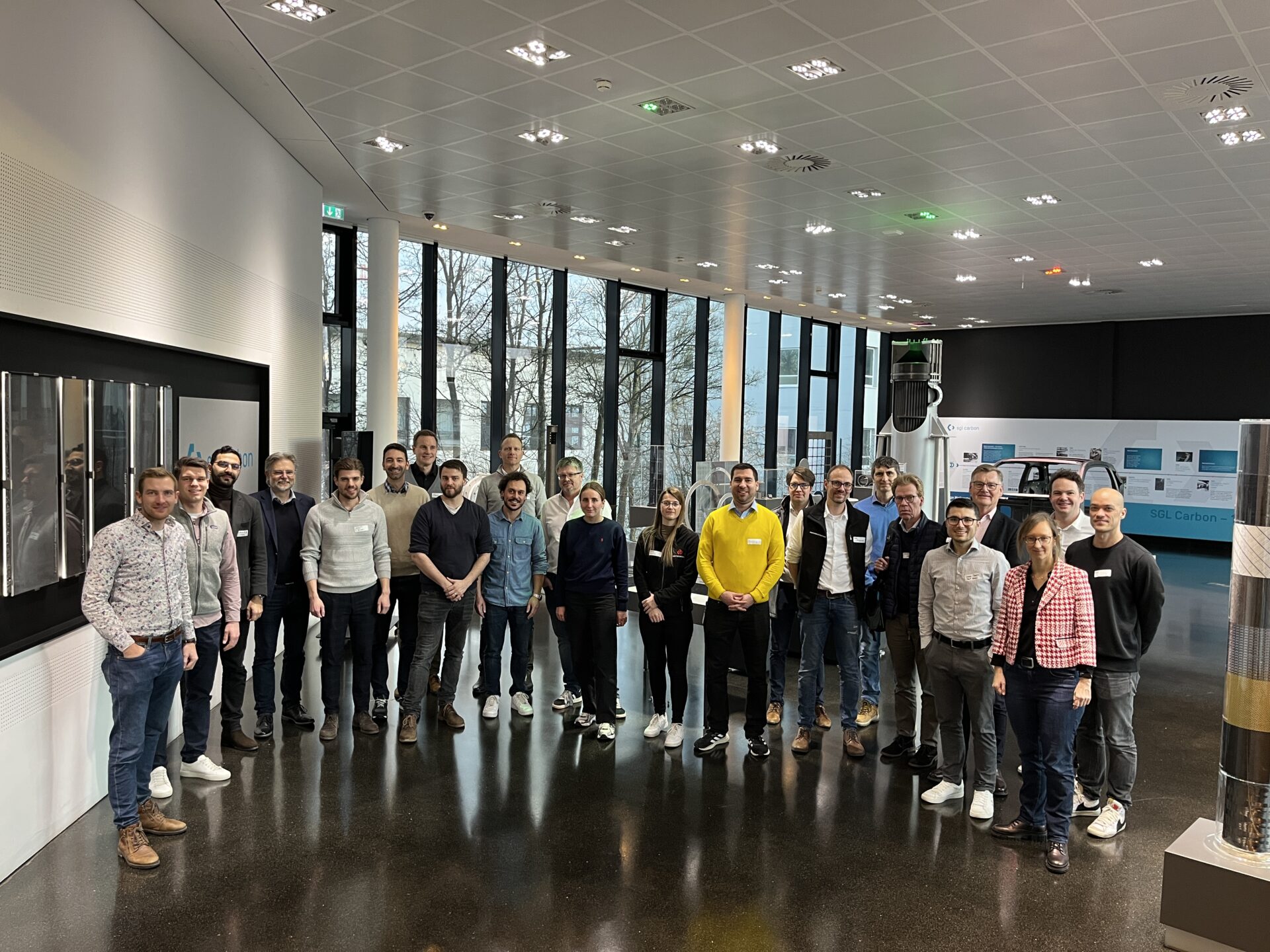
The regional network for product-focused innovation managers offers opportunities for practical discussion and networking several times a year.
How do you assess the potential of artificial intelligence for manufacturing companies?
In my view, it’s a real game-changer – particularly for manufacturing companies: imagine a medium-sized company with annual production costs of 10 million euros that manages to reduce these by 10 per cent through the use of AI. Or to increase its turnover by 10 per cent. That would already amount to 1 million euros in annual savings or additional revenue whilst keeping costs constant, which would have a direct impact on the bottom line. Either the company would benefit from the extra profit or – even better – it would reinvest the money in further (ideally AI-based) improvements that boost the company’s efficiency. This creates a virtuous cycle leading to greater competitiveness, which will be vital for survival in the future, particularly for energy-intensive companies in locations with high labour and energy costs, such as Germany.
Many companies do not know how to get started on unlocking their data assets and analysing them to create added value. What would you recommend?
In my own projects at SGL Carbon, I take the following approach: first of all, the pain points and optimisation targets must be identified: which aspects are currently causing the greatest problems for the company, the department or the production area, and how can we describe the state in which these problems would no longer exist? It is also important to analyse what types of data and data sources are already available in order to assess the current situation. For example, is sensor technology already installed in a production plant? How is the data classified, what is its quality, and how much effort is currently being invested in processing or cleaning the data? I then analyse how the existing data sources are already interconnected, so that as many synergies as possible can be realised later on. Only then do further steps follow, such as determining how this data can be processed and interpreted in a meaningful and as holistic a way as possible – for example, using AI. So, a considerable amount of effort and expertise is required before the AI can do its job.
“My motivation: to work together to advance our home – the A³ region – and the value creation that takes place here, so that we can preserve it as a place worth living in and ensure its continued success for future generations.”
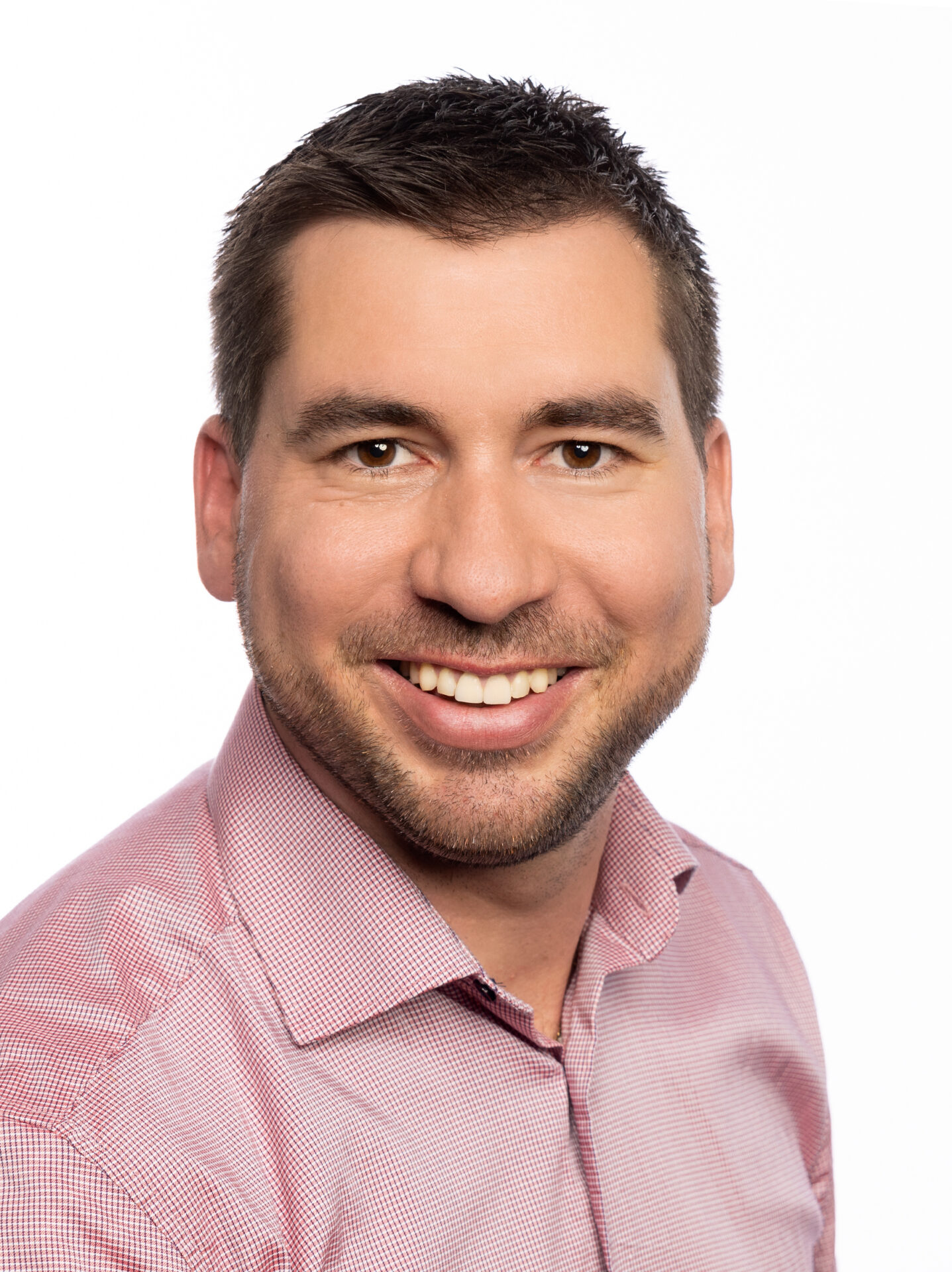
Michael Kühnel, Data Scientist at SGL Carbon and a committed innovator in the A³ region
You are involved in various regional initiatives. What motivates you to do this?
Goals are usually achieved more quickly when working together than when working alone. Many networks and clusters are built on this principle. Since 2010 – when I worked for Composites United e.V. for just under two years through the University of Augsburg as part of a so-called ‘project architect’ role – I have been able to experience the benefits of this approach first-hand. The successful application for the MAI Carbon flagship cluster was one of the outcomes of this. In my subsequent role at the Centre for Lightweight Production Technology at the German Aerospace Centre, I was able to further expand my network with many key players in the regional, as well as the German and European, composites and AI communities. The insights and contacts I gained during this time continue to help me in my work at SGL Carbon – since 2018 in the Design & Engineering division of our Lightweight & Application Centre, and since 2021 as a data scientist in our largest business division, Graphite Solutions. In addition, I remain actively involved in Composites United e.V., the Augsburg AI Production Network and the A³ network of regional innovation managers. I have also worked to ensure that the aerospace supplier trade fair ‘Airtec’ could establish itself in Augsburg – naturally with a focus on AI as well. The motivation is always the same: to jointly advance our home region – the A³ region – and the value creation based here, so as to preserve it as a liveable and successful place for future generations.
You are involved in various regional initiatives. What motivates you to do this?
Goals are usually achieved more quickly when working together than when working alone. Many networks and clusters are built on this principle. Since 2010 – when I worked for Composites United e.V. for just under two years through the University of Augsburg as part of a so-called ‘project architect’ role – I have been able to experience the benefits of this approach first-hand. The successful application for the MAI Carbon flagship cluster was one of the outcomes of this. In my subsequent role at the Centre for Lightweight Production Technology at the German Aerospace Centre, I was able to further expand my network with many key players in the regional, as well as the German and European, composites and AI communities. The insights and contacts I gained during this time continue to help me in my work at SGL Carbon – since 2018 in the Design & Engineering division of our Lightweight & Application Centre, and since 2021 as a data scientist in our largest business division, Graphite Solutions. In addition, I remain actively involved in Composites United e.V., the Augsburg AI Production Network and the A³ network of regional innovation managers. I have also worked to ensure that the aerospace supplier trade fair ‘Airtec’ could establish itself in Augsburg – naturally with a focus on AI as well. The motivation is always the same: to jointly advance our home region – the A³ region – and the value creation based here, so as to preserve it as a liveable and successful place for future generations.