Practical example: Innovation A generational change in production – How to ensure a timely and sensitive transfer of knowledge

At the ams Osram factory in Schwabmünchen, the transfer of knowledge during the handover between the older and younger generations is proving successful: A workable solution has been developed for effective yet socially sensitive knowledge management, which allows time for the exchange of experience between the outgoing and incoming managers.

Many companies face the following challenge: the baby boomers are retiring – and with them, decades of specialist knowledge and practical experience within the organisation. There is considerable pressure to find a successor for any vacant position. Solutions are urgently needed, particularly when it comes to filling a key role such as a management post. Often, there is not enough time for a thorough transfer of knowledge from older, experienced staff to their younger successors. Important company-specific know-how is lost. The gaps in knowledge left behind subsequently affect the quality of processes.

Knowledge transfer as the key to process reliability

Ams Osram employs around 280 people. The site manufactures highly specialised components for LEDs and light sources – for example, for torches in mobile phones or headlights in cars. Production is flexible and highly digitised, under the banner of ‘smart manufacturing’. Achieving zero defects with increasingly complex products places high demands on precision and process stability. The company relies on well-trained staff working in teams of mixed ages, as well as on efficient organisational and management structures. This includes ensuring a successful transfer of knowledge during management changes, which is of great importance for the continuity and stability of production processes.

Background – Loss of knowledge following a change in leadership

The factory manager, Mr Hild, reports that succession planning for senior management had followed a conventional pattern for a long time: a new manager would only take up the post once the previous one had retired. During handover procedures, it was not possible to draw sufficiently on the outgoing manager’s practical knowledge. Key issues relating to process design, potential sources of disruption and remedial measures remained unresolved: they only began to cause problems once the former incumbent had already retired. For the business, this could mean having to “completely restructure”, emphasises Mr Hild. They were no longer willing to accept this. So the plant developed a new, smarter solution. It allows ample time for a careful and systematic transfer of knowledge. And it offers good career prospects for both the younger successor and the older predecessor.
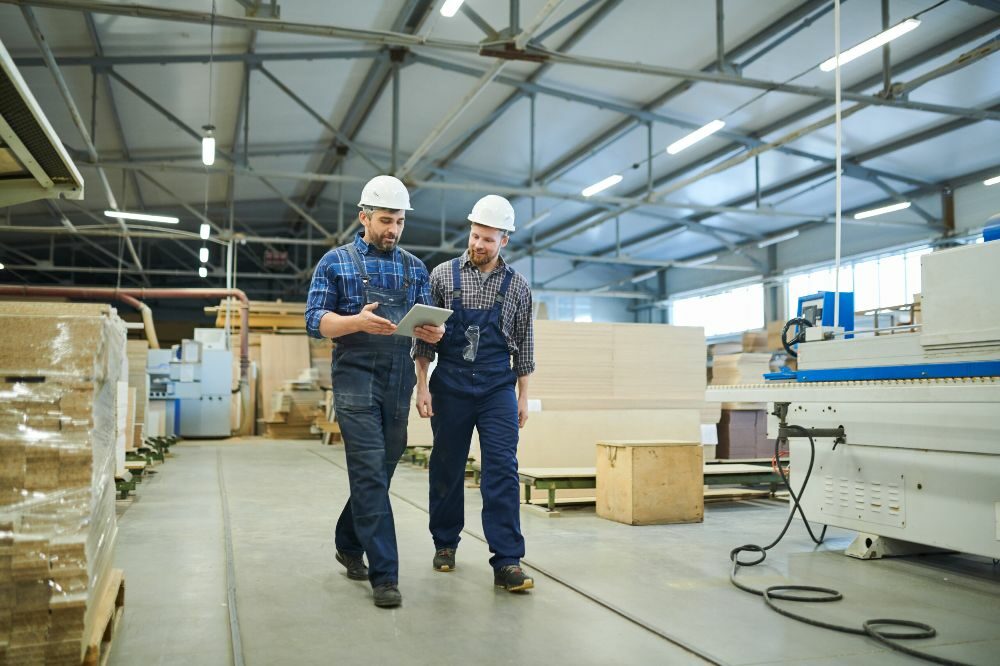
At the ams Osram factory in Schwabmünchen, the transfer of knowledge during the handover between the older and younger generations is proving successful: A workable solution has been developed for effective yet socially sensitive knowledge management, which allows time for the exchange of experience between the outgoing and incoming managers.

Many companies face the following challenge: the baby boomers are retiring – and with them, decades of specialist knowledge and practical experience within the organisation. There is considerable pressure to find a successor for any vacant position. Solutions are urgently needed, particularly when it comes to filling a key role such as a management post. Often, there is not enough time for a thorough transfer of knowledge from older, experienced staff to their younger successors. Important company-specific know-how is lost. The gaps in knowledge left behind subsequently affect the quality of processes.

Knowledge transfer as the key to process reliability

Ams Osram employs around 280 people. The site manufactures highly specialised components for LEDs and light sources – for example, for torches in mobile phones or headlights in cars. Production is flexible and highly digitised, under the banner of ‘smart manufacturing’. Achieving zero defects with increasingly complex products places high demands on precision and process stability. The company relies on well-trained staff working in teams of mixed ages, as well as on efficient organisational and management structures. This includes ensuring a successful transfer of knowledge during management changes, which is of great importance for the continuity and stability of production processes.

Background – Loss of knowledge following a change in leadership

The factory manager, Mr Hild, reports that succession planning for senior management had followed a conventional pattern for a long time: a new manager would only take up the post once the previous one had retired. During handover procedures, it was not possible to draw sufficiently on the outgoing manager’s practical knowledge. Key issues relating to process design, potential sources of disruption and remedial measures remained unresolved: they only began to cause problems once the former incumbent had already retired. For the business, this could mean having to “completely restructure”, emphasises Mr Hild. They were no longer willing to accept this. So the plant developed a new, smarter solution. It allows ample time for a careful and systematic transfer of knowledge. And it offers good career prospects for both the younger successor and the older predecessor.

Practical guide: ‘How to ensure effective intergenerational collaboration’

The article was originally published by the RKW Competence Centre as part of the project ‘Securing a Skilled Workforce – Every Age Counts’. The article relates to the practical guide developed as part of the project: ‘How to Ensure Effective Intergenerational Collaboration’ (in German).

In the practical guide, you will find the results of a company survey on intergenerational cooperation. It focuses on companies’ experiences with younger and older employees, as well as ways to foster positive working relationships. In addition, you will find tips on designing work to suit different generations, implementing HR policies tailored to different life stages, and providing practical on-the-job learning.

More information (in German)

A successful change of leadership in production

In the Mechanical Production department, a succession was due for the foreman’s post. This role involves managing a shift operation and, according to Mr Hild, is a “high-pressure job”. The new solution consisted of two components:

  1. The change of leadership in production involved a handover process that took some time. Mr Hild reports that the senior foreman – who had many years of professional experience – did not hand over his duties to the newcomer abruptly, but rather step by step.
  2. The change was accompanied by a role swap: the younger manager moved into the foreman’s role. In return, the previous incumbent moved into his successor’s former position in maintenance: “He coordinated,” says Mr Hild, “the technical troubleshooting – whilst continuing to act as a mentor to his successor.”

According to Mr Hild, the handover process, including the training and induction periods for the two individuals, took a year.

Support tailored to the new foreman’s needs

Mentoring proved highly beneficial for the new foreman’s induction. The transfer of knowledge from the predecessor to the successor could be tailored to specific needs and focused on concrete problems. Mr Hild describes how this worked in his own words: “The experienced foreman simply lent a hand. He wasn’t gone. You could always go to him, for example, when there were technically difficult issues – in other words, when the successor said: ‘I’m stuck here – could you have a look at it again?’” For the new foreman, this reliable support also meant he was relieved of pressure in stressful situations.

Older Managers: Changing Roles Without Losing Face

To ensure that leadership changes and job swaps were successful, the changes had to be thoroughly prepared and supported by organisational measures. Above all, the ‘human’ aspect must not be overlooked, particularly when dealing with the older foreman: the move from a management role to a technical administrative post did not initially seem attractive to the older man. According to Mr Hild, a solution had to be found here that avoided any loss of face or even demotion. Remaining in the same pay band was of great importance for the former manager to maintain his status. The high technical demands of the role in technical maintenance justified the high pay grade. Of course, this required some effort to gain the necessary qualifications.

Knowledge transfer from young to old: Older people stay ‘in the loop’ professionally

Mr Hild makes it clear that the older foreman had to be trained well in advance for his new role in technical maintenance. This is because the tasks involved are technically demanding; they require the competent handling of technical documentation and data in IT systems. With regard to digital applications, the older manager had to – and was able to – learn new skills, with support from his colleagues. Younger, digitally savvy staff were on hand to offer their older colleague advice and practical help as he familiarised himself with the digital applications.

Reverse mentoring: Knowledge transfer is not a one-way street

The extensive training programmes put in place to support the leadership transition demonstrate that the principle of lifelong learning is highly relevant in practice at ams Osram. It forms part of a culture of collaboration in which older and younger staff support one another, whether in passing on process knowledge or in using digital applications. Knowledge transfer takes place continuously and in both directions, in the form of reverse mentoring and with a strong practical focus. The training programmes are embedded within work processes, ensuring that the lengthy overall duration of the handover does not result in excessive downtime for those involved.

Regulating leadership transitions – a win-win for all involved

The new succession plan in Mechanical Production strengthens process reliability, ensures more stable operations and sends a clear signal in favour of an age-friendly HR policy. Both employees and the company stand to benefit in several ways:

  • The older, outgoing manager secures their status through a new role that is professionally challenging and by taking on an important mentoring role for their successor. Another advantage is that the new role is complex but free from the time pressure and stress of day-to-day management. The solution is therefore a healthy and age-appropriate option for employees of a more advanced working age.
  • The new manager is given opportunities for professional development and, when taking up the role, benefits from the transfer of knowledge and the support of their predecessor – the foundation for acting with confidence in a position of responsibility.
  • The company gains process stability and enhances its appeal as an employer. Internal promotion opportunities for staff signal good career prospects.

Knowledge transfer from young to old: Older people stay ‘in the loop’ professionally

Mr Hild makes it clear that the older foreman had to be trained well in advance for his new role in technical maintenance. This is because the tasks involved are technically demanding; they require the competent handling of technical documentation and data in IT systems. With regard to digital applications, the older manager had to – and was able to – learn new skills, with support from his colleagues. Younger, digitally savvy staff were on hand to offer their older colleague advice and practical help as he familiarised himself with the digital applications.

Reverse mentoring: Knowledge transfer is not a one-way street

The extensive training programmes put in place to support the leadership transition demonstrate that the principle of lifelong learning is highly relevant in practice at ams Osram. It forms part of a culture of collaboration in which older and younger staff support one another, whether in passing on process knowledge or in using digital applications. Knowledge transfer takes place continuously and in both directions, in the form of reverse mentoring and with a strong practical focus. The training programmes are embedded within work processes, ensuring that the lengthy overall duration of the handover does not result in excessive downtime for those involved.

Regulating leadership transitions – a win-win for all involved

The new succession plan in Mechanical Production strengthens process reliability, ensures more stable operations and sends a clear signal in favour of an age-friendly HR policy. Both employees and the company stand to benefit in several ways:

  • The older, outgoing manager secures their status through a new role that is professionally challenging and by taking on an important mentoring role for their successor. Another advantage is that the new role is complex but free from the time pressure and stress of day-to-day management. The solution is therefore a healthy and age-appropriate option for employees of a more advanced working age.
  • The new manager is given opportunities for professional development and, when taking up the role, benefits from the transfer of knowledge and the support of their predecessor – the foundation for acting with confidence in a position of responsibility.
  • The company gains process stability and enhances its appeal as an employer. Internal promotion opportunities for staff signal good career prospects.

Successful knowledge transfer

Production Manager Ingo Hild draws a positive conclusion: “We are now trying to apply such solutions to other areas as well.” A systematic approach to workforce planning to prepare for succession arrangements, alongside coordination processes with those involved, provides the framework for this. When leadership transitions are managed with time, respect and mutual trust, everyone benefits – the people, the processes and the company itself.